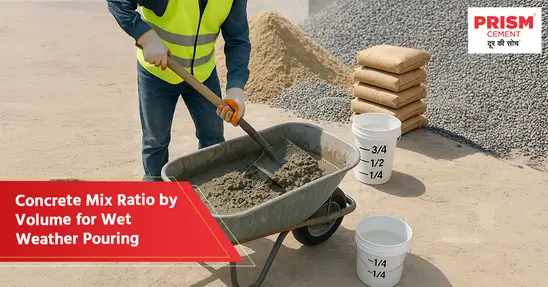


When it comes to plastering, one of the most overlooked yet critical factors is getting the right cement-sand-water ratio for plastering. Whether you are renovating a single wall or constructing an entire home, the mix you use behind the scenes directly impacts the strength, durability, and finish of the plaster - how long your walls will stand strong, how smooth the finish will be, and how well your surfaces will resist wear over time.
In this blog, we will walk you through why this ratio matters, what happens if it is wrong, and how to get the right mix for effective plastering.
Understanding the Cement-Sand-Water Ratio
The cement-sand-water ratio for plastering refers to the proportion of each component mixed together to create the ideal plaster. Cement binds the mix, sand gives it structure, and water activates the cement to start the hardening process and gain strength.
For general wall plastering, cement-to-sand ratios of 1:4 or 1:6 (that’s one-part cement to four or six parts sand) are commonly used, depending on the surface and the required strength:
- 1:4 is used where higher strength is needed (e.g., external walls or wet areas like bathrooms and kitchens).
- 1:6 is suitable for internal plastering where exposure to moisture and external weather conditions is lower.
The cement-to-water ratio, however, is equally important. Too much water can weaken the plaster and lead to shrinkage cracks, while too little water can reduce workability and prevent proper bonding with the wall surface.
Your choice of cement types also plays a role here. Blended cements like PPC (Portland Pozzolana Cement) are often ideal for plastering, because they offer improved workability, smoother finish and long-term durability.
Effects of Incorrect Cement Sand Water Ratios
Incorrect cement-sand-water ratio for plastering can lead to serious structural and surface problems down the line.
If the cement to water ratio is too high (i.e., too much water), the plaster may develop shrinkage cracks, poor bonding, and a weaker surface that deteriorates quickly. On the other hand, a mix that is too dry may not stick properly and can lead to rough, uneven finishes or surface flaking.
Improper proportions for mixing concrete or plaster can also cause issues with setting time and durability. Over-sanded mixes lack cohesion, and under-sanded ones become brittle.
How to Achieve the Perfect Plastering Mix?
To calculate cement requirements correctly, start with the surface area you plan to plaster and the desired thickness of plaster. Then, use the standard mix ratio commonly 1:4 for inner walls and 1:6 for outer surfaces.
Ensure your water-cement measurement is accurate. As a general guideline, the water to cement ratio should be around 0.4 to 0.6 by weight. Using a measuring container instead of estimating quantities manually can help maintain consistency across batches.
The quality of sand matters too—opt for well-graded sand (commonly clean river sand) for better bonding and surface finish. Also, make sure to choose high-quality cement to maximise performance.
Best Practices for Plastering Application
Once you have nailed the cement-sand-water ratio for plastering, it is all about proper application technique. Here are a few tips:
- Pre-wet the surface before plastering and cure it after plastering (hardened state) to ensure proper bonding and hydration.
- Mix thoroughly to avoid lumps and ensure a uniform texture.
- Apply in layers no thicker than 12–15 mm for optimal strength.
- Use the right tools— such as wooden floats—to ensure a smooth finish.
Good technique is just as important as the right cement ratio.
Common Mistakes to Avoid
Even seasoned masons sometimes make these common mistakes :
- Estimating mix ratios visually instead of measuring accurately
- Using dirty or salty water, which can compromise the plaster
- Ignoring curing times after plastering
- Using poor quality cement types or expired cement
- Not adjusting the concrete mix ratio for specific environmental conditions
Avoid these, and your plastering work will not only look great but also last for decades.
Conclusion
Getting the cement-sand-water ratio for plastering right is more than just a construction best practice it is crucial for ensuring the integrity and beauty of your walls. From ensuring a proper cement to water ratio, to selecting the right cement types and mixing with precision, every detail contributes to the final results.
That is why choosing a cement brand that you can trust is equally important.
At Prism Cement, we provide top-tier, consistently high-quality cement that is ideal for wide range of construction applications, including wall plastering and cementitious concrete work. Whether you are a builder, architect, or homeowner, Prism Cement ensures your plastering projects start on solid ground.
Make the right choice today with Prism Cement—because every wall deserves strength that lasts.
FAQ
Q1. Why is the correct cement sand water ratio important in plastering?
Answer: It ensures strength, durability, and a smooth finish. Incorrect ratios can lead to cracking, poor bonding, and surface failure.
Q2. What is the ideal cement-sand-water ratio for plastering?
Answer: Commonly, it is 1:4 or 1:6 cement-to-sand ratios, and about 0.4–0.6 parts water by weight of cement.
Q3. What happens if the cement sand ratio is incorrect?
Answer: Too much sand weakens the plaster, while too much cement can make it brittle. Incorrect water levels also lead to cracks and poor adhesion.
Q4. How can I measure and maintain the right plaster mix ratio?
Answer: Use measuring containers for consistency and adjust the mix depending on type of surface and climate conditions.
Q5. Can additives or admixtures improve plaster quality?
Answer: Yes, certain admixtures can enhance workability, bonding, and water resistance, especially in specialised or challenging construction environments.