

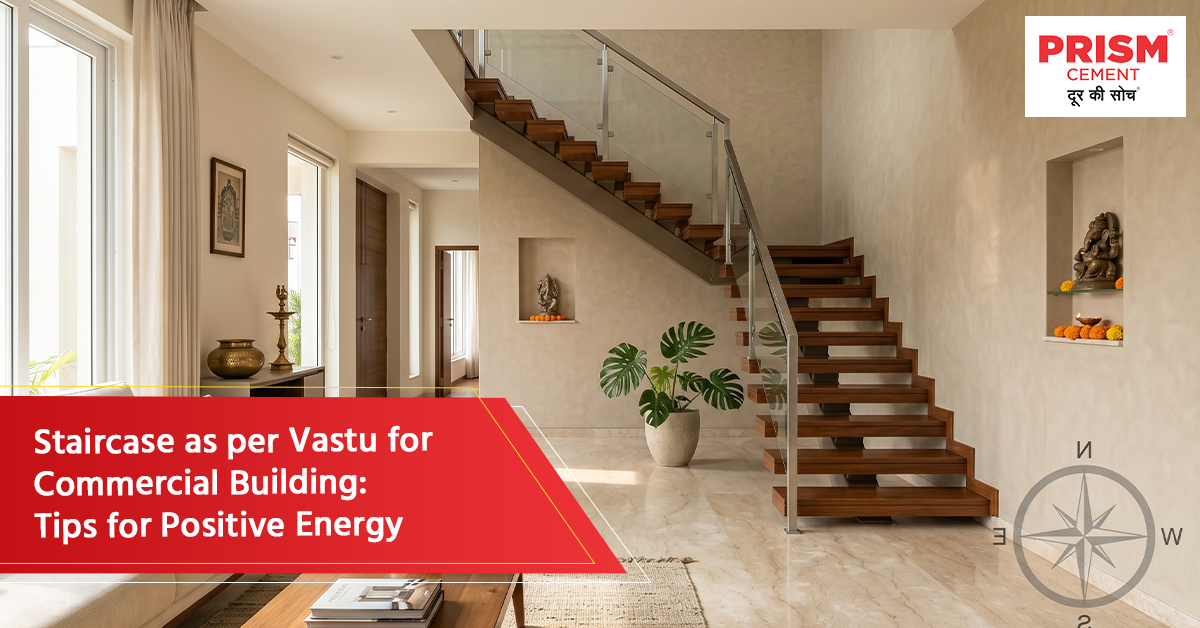
Designing a staircase as per Vastu in a commercial project can significantly influence the energy flow, employee productivity, and overall success of the business. The Vastu of staircase plays an essential role in creating a harmonious work environment. A well-designed staircase not only enhances the aesthetic appeal of a building but also ensures positive energy circulation that fosters growth and prosperity.
In this blog, we will explore the importance of following staircase Vastu, the best direction for staircase as per Vastu, and key Vastu tips for your commercial building.
What is Staircase Vastu?
Staircase Vastu refers to the traditional Vastu Shastra principles associated with the placement, direction, and design of staircases in order to promote a balanced flow of energy within a building. According to Vastu Shastra, the positioning and structure of the staircase influence the energy dynamics in a space, especially in commercial buildings where high foot traffic and interactions occur.
Proper placement ensures a balanced environment, which is crucial for the success of any commercial project.
Why Does Staircase Vastu Matter for Commercial Buildings?
In a commercial building, staircase Vastu is not only about structural placement but also about optimising the work environment. Since staircases are often connecting points between different levels, they play a critical role in facilitating smooth energy transitions.
By adhering to staircase Vastu principles, businesses can ensure:
- Increased Employee Productivity: A properly placed staircase promotes harmony and reduces negative energy, creating a more efficient and positive work atmosphere.
- Balanced Energy Flow: It helps ensure that the building's energy circulation supports business growth and success.
- Structural and Aesthetic Benefits: Aligning staircase Vastu with architectural requirements helps enhance both the functionality and visual appeal of the space.
Best Direction for Staircase as per Vastu in Commercial Buildings
The direction of the staircase is a key element in staircase Vastu. Selecting the best direction for a staircase as per Vastu is traditionally believed to help maintain a positive and balanced environment within the building.
South-West Direction (Ideal Placement)
The South-West direction is considered one of the most favourable locations for a staircase in a commercial project. This direction is traditionally associated with stability and strength, which are important considerations for business growth and development.
South or West Direction
Both the South and West directions are also good choices for placing a staircase. These directions support proper movement within the building and align with traditional Vastu tips, offering a sense of balance and harmony.
Directions to Avoid
According to traditional Vastu principles, the North-East direction should generally be avoided for staircases. This area is considered important for maintaining an open and unobstructed flow within the space. Similarly, placing the staircase in the centre of the building, also known as Brahmasthan, is generally not recommended in traditional Vastu planning.
Vastu Tips for Staircase Design
Following appropriate staircase Vastu tips can help improve the aesthetic and functional aspects of your commercial project. Here are some key design recommendations:
Clockwise Staircase Direction
When designing the staircase as per Vastu, ensure that it ascends in a clockwise direction wherever the building layout permits. This is traditionally considered favourable for both residential and commercial buildings.
Proper Number of Steps
The number of steps is an important factor in staircase Vastu. Many traditional Vastu practices prefer an odd number of steps, as this is believed to attract good fortune. The number and dimensions of steps should also comply with applicable building and safety requirements.
Staircase Shape
While rectangular and square staircases are common, circular or spiral staircases are generally discouraged in traditional Vastu planning for commercial projects. These shapes are believed to disturb the smooth flow of energy.
Staircase Position in Entrance Areas
Ensure the staircase is not directly in front of the entrance or main door. It is advisable to place it slightly away from the entrance to maintain a balanced and welcoming layout.
Staircase Colours as per Vastu for Commercial Projects
The colour of the staircase in a commercial project plays a role in the building's overall visual environment. Lighter shades such as cream, beige, and pastel colours are commonly preferred, as they can create a calm and spacious appearance. Dark and dull colours are generally avoided in traditional Vastu planning.
Vastu Tips for Staircase in Offices and Commercial Buildings
- Avoid clutter: The space around the staircase should be clean and free from unnecessary obstructions.
- Well-lit staircases: Ensure the staircase area is adequately lit. Good lighting is essential for visibility, safety, and creating a welcoming environment.
- Use of plants: Small plants can be placed near staircases, but avoid large plants that obstruct movement or make the area feel congested.
Common Staircase Vastu Mistakes to Avoid
- Incorrect placement: According to traditional Vastu principles, placing the staircase in the North-East or centre of the building may disrupt the intended energy balance.
- Too many steps: Maintain a practical number of steps while ensuring compliance with building and safety requirements.
- Ignoring lighting: Poorly lit staircases can create unsafe and unwelcoming spaces and should be avoided.
Conclusion
Incorporating staircase Vastu into your commercial project helps align the building's design with traditional principles associated with balance and harmony. By considering factors such as direction, design, and colour choices, you can create a space that is aesthetically appealing and functionally effective.
For your commercial project, consider using high-quality construction materials that support structural requirements and long-term durability. Prism Cement products, such as Prism Champion Plus, are designed to support construction requirements where strength and durability are important considerations. Following staircase Vastu tips alongside using quality materials can help achieve both architectural functionality and structural stability.
Disclaimer: The information shared in this blog is for general awareness and informational purposes only. We are not Vastu experts, and readers are advised to consult a qualified Vastu professional for specific guidance.
Frequently Asked Questions (FAQs)
Can the Vastu of staircase impact employee productivity in a commercial project?
According to traditional Vastu beliefs, a well-aligned staircase can contribute to a balanced work environment, which may positively influence employee productivity.
Is there a preferred material as per staircase Vastu guidelines?
While there is no universally prescribed material preference, natural materials such as wood or stone are often considered favourable in traditional Vastu practices.
Can glass staircases be used as per Vastu tips?
Glass staircases can be used as long as they do not obstruct movement and are positioned according to the intended Vastu direction.
Does lighting affect staircase Vastu in commercial projects?
Proper lighting is considered important in staircase Vastu and is also essential from a practical safety perspective. It improves visibility and contributes to a welcoming atmosphere.
Should staircase Vastu be considered during renovation of a commercial project?
Yes, traditional Vastu considerations can be reviewed during renovations to ensure that the updated space aligns with the intended design and energy-flow principles.